Early Dementia Care Choices: Is Memory Care or Assisted Living the Better Fit?
Business Name: BeeHive Homes of Henderson
Address: 1000 Greenway Rd, Henderson, NV 89002
Phone: (702) 551-0265
BeeHive Homes of Henderson
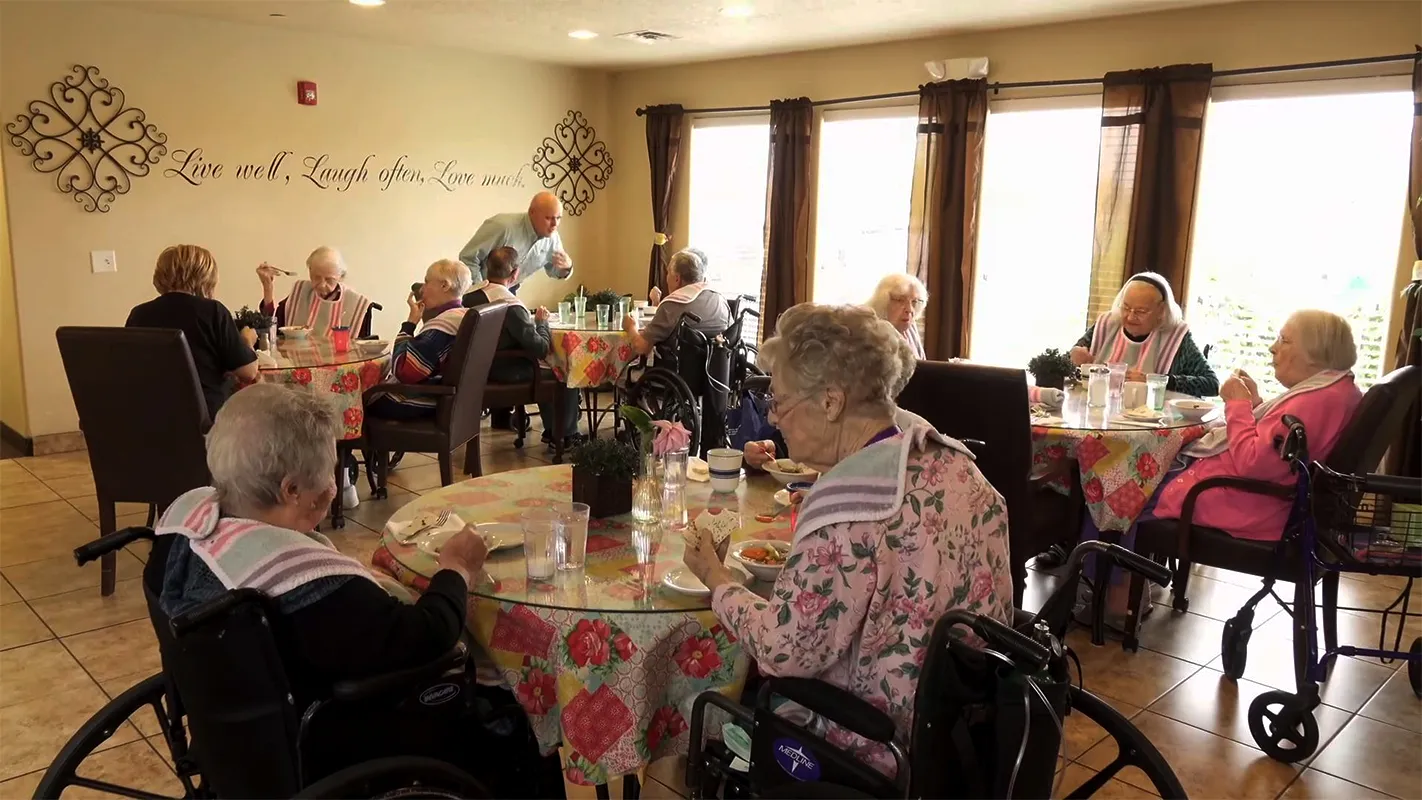
At BeeHive Homes of Henderson, Nevada, we offer the finest assisted living and memory care experience available in a cozy, comfortable homelike setting. Each of our residents has their own spacious room with an ADA approved bathroom and shower. We prepare and serve delicious home-cooked meals three times a day every day. We maintain a small, friendly community of only 20 residents per home. We provide regular activities that our residents find fun and contribute to their health and well-being. Our staff is attentive and caring and provides assistance with daily activities to our residents in a loving and respectful manner. We would like to invite you to tour and experience our memory care & assisted living home and feel the difference.
1000 Greenway Rd, Henderson, NV 89002
Business Hours
Families frequently arrive at the exact same crossroad: a loved one has actually gotten an early dementia medical diagnosis and is beginning to lose ground with errands, expenses, meals, or medication routines. Everybody can see that living totally alone has actually become risky. The question that follows is deceptively simple. Should we begin with assisted living, or move directly into a memory care home? The best answer depends less on the label and more on your loved one's particular pattern of strengths, dangers, and preferences, plus what regional communities actually provide behind their brochures.
I have walked this decision with hundreds of households. I have seen brilliant starts in assisted living that stretched independence for years, and I have actually enjoyed other homeowners support just after moving to memory care. The option is part clinical assessment, part family logistics, part gut check about safety. There are trade‑offs either way.
What "early dementia" usually looks like
Dementia is an umbrella term explaining progressive cognitive decrease that interferes with everyday function. Early stages can be subtle. The majority of people still dress and shower individually and hold a meaningful conversation, particularly in the morning. The fractures often display in what clinicians call instrumental activities of daily living, the complex tasks that keep a household running.
Patterns I typically see include unsettled expenses accumulating, repeated online purchases, a fridge filled with expired food, missed medication doses, and circular driving paths after simple errands. Friends may observe social withdrawal or that stories repeat 3 times over lunch. Short‑term memory slips are the headline, however evaluating risk can be tougher. I when worked with a retired engineer who might describe every bolt on a lawn mower, yet might not remember he had currently taken his blood thinner. The memory failure mattered since of the medication's stakes.
Early signs vary by type of dementia. Alzheimer's skews to memory and word finding. Vascular dementia looks patchier, with great days and bad days, or weakness on one side after repeated small strokes. Lewy body dementia can introduce visual misperceptions and big swings in awareness, which makes safety unforeseeable. Frontotemporal dementia can show up with modifications in judgment and impulse control long in the past memory fails, so an extremely spoken individual may sound fine while making harmful choices. These subtleties influence whether an assisted living setting can supply sufficient oversight to avoid injuries and elopement, or whether the structure of memory care is the safer foundation from the start.
What assisted living in fact offers
Strip away the sales language and you will find that assisted living is designed for people who need assist with some daily tasks but do not need 24‑hour medical guidance. Personnel assist with bathing, dressing, grooming, toileting, and medication management. Meals are prepared, housekeeping is consisted of, and there are social activities. Many structures have gorgeous typical locations, yards, and on‑site beauty salons. Homeowners typically live in private apartments, lock their own doors, and come and go to group occasions as they choose.
Staffing in assisted living is variable. A common daytime pattern is one caregiver for 8 to twelve residents, with thinner ratios overnight. Nurses are typically not on site around the clock, although some bigger communities have an LPN or RN throughout company hours, plus on‑call arrangements. Laws differ extensively by state. Some states enable assisted living to accept locals with mild cognitive impairment or early dementia if they can do so securely, while others require a transfer to a secured memory care unit at the first sign of wandering threat. The label does not ensure ability; ask about actual staffing, training, and resident mix.
From an expense viewpoint, assisted living normally starts with a base month-to-month rate for space and board, then adds a care fee based on assessed needs. In many markets, base rates fall in the 3,500 to 6,000 dollars range for a studio or one‑bedroom, with care costs adding 500 to 2,500 dollars depending on assistance needed. Medication administration, incontinence products, and escorts to meals typically come as different line items. Check out the menu of fees as you would check out an airline's luggage policy, and ask how typically reassessments occur. In the majority of structures, care levels are reviewed every 30, 60, or 90 days.
When assisted living works well for early dementia, it is due to the fact that it provides the best scaffolding without smothering independence. A retired teacher I dealt with moved into assisted living when she started burning pots and skipping meals. With 3 ready meals, medication suggestions, and a morning cue to shower, she gained back weight, rejoined a book club, and stayed five years, moving only when roaming began after dusk. She understood her next-door neighbors and made her way confidently from her home to the dining room. That familiarity had value that no list can capture.
What memory care adds to the equation
Memory care is designed for people living with dementia, beginning to end. The developed environment and daily regimens lower confusion and reduce threats that assisted living can not dependably control. Think of it as assisted living plus dementia‑specific programming and security.
Most memory care homes are secured. Doors need a code to exit, and there are alarms or sensors on boundaries. This does not turn the system into a jail. Homeowners go outside into protected yards, take part in supervised neighborhood trips, and maintain a day-to-day rhythm. The objective is to prevent risky roaming, a threat that rises as soon as someone forgets where they were headed or misjudges traffic. Personnel receive specialized training in redirection, recognizing unmet needs that fuel agitation, and cueing strategies for bathing and dressing. The activity calendar looks various too. Instead of trivia contests covering unknown dates, you will see task‑based programs like folding warm towels, baking, gardening, or music that makes use of long‑term memory. Montessori‑inspired dementia care, where tasks are streamlined and choice‑driven, has ended up being more noticeable in well‑run communities.
A strong memory care program pays attention to sensory load and regimen. Lighting follows a consistent day‑night pattern to lower sundowning. Passages might consist of shadow boxes with personal mementos outside each space to help with wayfinding. Dining utilizes color contrast on plates and tablecloths to compensate for visual‑perceptual modifications. Speech is brief and concrete. Noise is moderated. Personnel ratios are tighter than in assisted living, in some cases one caretaker to six or 8 residents throughout the day, and one to 10 or twelve overnight, though this differs commonly. On‑site nursing hours also vary; some memory care systems share a nurse with the assisted living building next door.
Memory care costs more. In the majority of regions, households ought to anticipate 20 to 30 percent above assisted living rates. A reasonable working variety is 5,000 to 9,000 dollars each month, with greater costs in seaside cities and lower in rural areas. That increase reflects staffing and programs strength, secured style, and higher oversight. Some communities bundle care into a flat memory care rate that consists of medication administration and incontinence assistance. Others still use a tiered design. When you tour, ask what activates a charge dive, and what takes place if care requirements exceed what the system can safely supply. Every community has a discharge limit, even if they avoid naming it.

I often meet households who worry that memory care will feel infantilizing or too limiting for someone in the early phase. This is not ensured. The very best memory care neighborhoods develop choice into the day, honor adult identities, and withstand the impulse to overassist. I have actually seen a previous civil engineer continue to manage a common tool caddy for light jobs, and a retired nurse lead a hydration round. What modifications is the safety net, not the individual's worth.
Overlap and essential differences
Both assisted living and memory care offer meals, housekeeping, social engagement, and aid with personal care. The distinctions appear in what occurs when somebody is confused or at risk.
Assisted living expects more independent navigation. If your mother can reliably discover the dining room, use an elevator, and return to her home, assisted living keeps her in a familiar, apartment‑style flow. If she gets lost in between her door and the lobby, stresses when an alarm sounds, or wanders looking for a child who is now a grown adult, that dynamic overwhelms most assisted living floors. Staff in assisted living are kind and work hard, but they are not set up to monitor exit doors continuously, revamp an activity for somebody who can not follow steps, or pacify late‑day uneasyness with structured sensory input.
Memory care expects confusion and prepare for it. Redirection is a core skill, not an occasional courtesy. Exit‑seeking is prepared for, and the structure works together with the strategy instead of depending on staff to chase alarms. The daily regular offers clear start and stop hints. When cognition dips in the afternoon, there are much shorter, tactile activities and peaceful spaces that absorb that energy. The entire system is shaped around dementia care.
Medication security is a strong differentiator. In assisted living, locals can often manage their own medications if they demonstrate skills, though many choose staff administration. In memory care, personnel handle medications as a guideline, which lowers threats of double dosing or avoided pills that destabilize blood pressure, blood glucose, or mood.
Another line is the response to habits that signal distress. If your father develops paranoia that items are being taken, or he misreads patterns on a carpet as insects, a memory care group will have training in how to validate the sensation, decrease triggers, and shift tasks with dignity. Assisted living might ask the household to offer private responsibility hours to cover the gap, or they might suggest a transfer if the pattern persists.
Where starting in assisted living makes sense
If your loved one has early dementia with great insight, no roaming history, and consistent daytime function, assisted living can be a strong primary step. Individuals who flourish in assisted living tend to value personal privacy and the feel of a house, prefer a lighter touch from staff, and take pleasure in a more varied peer group that includes residents without cognitive problems. Some couples choose assisted living so they can share a standard apartment and routine while just one partner receives help, especially when memory care homes in the area are primarily personal studios.
Finances can tip the scale too. If the spending plan is tight and the difference in monthly expense would cut years off affordability, starting in assisted living and preparation for a later move might be practical. A veteran's Aid and Presence benefit can offset 1,200 to 2,300 dollars monthly, depending on marital status. Medicaid coverage for assisted living and memory care varies by state and program, and lots of neighborhoods keep a limited variety of Medicaid waiver slots. When funds are limited, ask each building's director whether citizens can convert to Medicaid in location, and if so, for how long the private pay period must be first.
I advise assisted living when a strong family presence includes oversight. If a daughter or son visits three times weekly, notifications early changes, and can act quickly to change the strategy, assisted living's lighter supervision becomes less risky.
Where moving directly to memory care is the much safer call
Three patterns steer me to memory care from the start. The first is exit‑seeking or a continual roaming history, even if there was no actual elopement. The 2nd is bad security judgment integrated with confabulation, such as turning on the range and forgetting it is hot, insisting on driving after getting lost, or giving away cash to strangers by phone. The 3rd is behavioral modification that requires constant dementia‑specific techniques to avoid escalation, for example late‑day agitation or misinterpreting benign interactions as threats.
Families typically ask whether beginning in assisted living might purchase time while preserving self-respect. If any of those patterns exist, you are not trading dignity for security by choosing memory care. You are selecting a setting where the walls, staffing strategy, and day-to-day rhythm meet the person where they are.

Here is a quick filter I share in household meetings.
- Repeated wandering or exit‑seeking in the previous 60 days
- Unsafe kitchen or medication mistakes in spite of prompts
- Getting lost within structures or parking area already familiar
- Increasing paranoia, misperceptions, or late‑day agitation
- Limited insight into deficits, paired with resistance to help
If 2 or more of these are true, memory care is typically the better fit.
The couple's dilemma
One of the hardest circumstances includes couples when only one partner has dementia. A lot of assisted living neighborhoods welcome couples and price the second resident at a reduced rate, adding care costs for the partner who needs aid. Numerous memory care systems, by contrast, only allow the person with dementia to reside on the protected floor. A few neighborhoods use buddy memory care houses for couples, but not many.
I have seen creative options. In one case, a spouse with early Alzheimer's relocated to memory care for safety, and his other half rented an independent living house in the very same building, investing daytime hours with him and going back to her own bedroom in the evening. It pleased both security and marital closeness. In another, a couple begun together in assisted living with a clear plan to transition to memory care if he began to exit‑seek. They prioritized proximity when visiting and picked a campus with both levels of care under one roofing system to minimize disruption later.
What to look for when you tour
A structure can state it uses dementia care without providing the information that matter. Enjoy the micro‑interactions. Does a caregiver kneel to greet a resident at eye level, or call throughout the room? Are people engaged in something purposeful, or is the television bring the load? Are there clear visual hints for the restroom from the bed? Is the outside space truly functional, with a flat loop and shade, or is it a locked box nobody enters?
Ask pointed concerns. The answers will tell you whether the neighborhood's dementia care is a program or a paragraph in a brochure.
- How does staff deal with exit‑seeking without physical restraint?
- What is the common daytime and over night staffing on the unit?
- What triggers a transfer to a higher level of care or hospital?
- How are medications handled, and who evaluates psychotropics?
- Can we do a short respite stay before signing a longer lease?
If the director can not address, ask to consult with the nurse or memory care coordinator. Transparency today prevents a scramble later.
Money, agreements, and the fine print
Care expenses rarely relocate a straight line. Expect reassessments. If your mother starts needing two individuals to help with transfers, or she becomes incontinent, the charge will increase. If she stabilizes, fees seldom go back down, though it is worth asking. Take notice of move‑in charges, neighborhood fees, and whether the structure utilizes a third‑party drug store that includes delivery charges. Arbitration clauses appear in numerous residency arrangements. If you are uncomfortable with them, ask whether they are optional; in some states they are.
Respite stays can be a clever method to check the fit. A 14 to 1 month trial lets you see how your father performs in memory care without dedicating to a year‑long lease. Insist on a written prepare for how personnel will approach his known triggers and preferences. If the respite goes well, you get confidence. If it does not, you still have your choices open.
Long term care insurance coverage can spend for either assisted living or memory care once the policy's criteria are met, normally requiring aid with two or more activities of daily living or having a cognitive problems that requires guidance. Start the claim documentation early. Benefits frequently start after an elimination duration of 30 to 90 days.
How timing impacts outcomes
Moving too late can create a steep, stressful shift. An individual who has actually already fallen two times or been discovered outside in winter season without a coat is getting here with momentum you will need to intercept. The first 2 weeks in a new setting are by meaning disorienting. Include relocation tension to middle stage dementia, and you may see short-term aggravating in habits or confusion. That does not indicate the relocation was wrong, but it indicates you should not await a crisis to decide. I encourage families to tour while the person with dementia can still walk the halls, meet personnel, and take in some of the brand-new design. Familiarity, even if partial, helps later.
On the other hand, moving too early can backfire. A passionate walker who flourishes on long, without supervision loops around a community may feel penned in by a protected yard, even a great one. If insight is still strong and wandering has not emerged, starting in assisted living and revisiting the strategy every 3 to 6 months might take full advantage of quality of life. There is no universal guideline; your loved one's temperament and history matter.
Edge cases that require unique judgment
Young start dementia alters the calculus. A 58‑year‑old with frontal behavioral changes will not blend well in a memory care system developed around 80‑plus locals. Look for neighborhoods with experience in younger citizens, more physical activity, and personnel comfortable with disinhibition and pacing.
Bilingual or bicultural locals deserve attention to language and food. Confusion amplifies when the surrounding language is not the one somebody defaulted to in childhood. If the only Spanish spoken in the structure is at the reception desk, that will not be enough.
Rural markets can present thin options. I have assisted households who drove 45 minutes to the closest memory care and chose assisted living locally since they might visit every day. The additional presence made up for the setting. When you choose in between ideal however far and good enough however near, consider who will appear on Tuesday afternoon in February. Assistance you can sustain beats a strategy you will abandon.
How to prepare the person and the team
Pack the room like you are building a memory map. Familiar armchair by the window, preferred quilt on the bed, household images in constant places. Label drawers with words and pictures. Bring a little basket of tactile jobs that fit your person's history: playing cards for a previous poker host, large‑piece puzzles for an enthusiast, a tidy box of nuts and bolts for a mechanic. Offer a written life story to the staff. 2 pages are enough. Include nicknames, former careers, foods loved and hated, music that soothes, and subjects to avoid. Great dementia care is personal care.
Stay throughout the very first meals if the community welcomes it. Watch where your loved one naturally sits and whether staff cue hydration. Bring a trusted regimen from home. A brief afternoon walk, a prayer before dinner, or the same song at bedtime can anchor the day. If there is a bump, resist the reflex to end in 48 hours. Work with the group. Request a concrete strategy to address the particular friction point. When families and personnel share observations and tweak techniques, the first hard week often settles.
Putting the pieces together
Families desire a definitive response to the title question, however the much better objective is a clear decision framework. If risks are contained with predictable triggers, and your loved one can browse a building safely, assisted living protects autonomy and often costs less. If confusion is currently producing wandering, safety judgment is jeopardized, or behavior requires specialized approaches, a memory care home deals structure that secures self-respect by avoiding repeated failures.
There is space for creativity. Co‑located schools enable a stepwise relocation as requirements grow. Respite remains let you test without long dedications. Private responsibility assistants can overlay assistance in assisted living to bridge a tough spot, however at a cost. None of these choices lock you in forever. Dementia care is iterative. You will review the strategy as the disease and the individual change.
The households I have seen fare best accept two truths at the same time. Initially, the right environment can support function and pleasure for months or years. Second, dementia continues to progress no matter how excellent the care is. Your job is not to chase after a perfect setting, but to match the setting to the person you enjoy at this point in time, with eyes open up to what follows. When you approach it that way, the labels matter less. Security, engagement, and respect lead you to the best door.
BeeHive Homes of Henderson provides assisted living care
BeeHive Homes of Henderson provides memory care services
BeeHive Homes of Henderson provides respite care services
BeeHive Homes of Henderson supports assistance with bathing and grooming
BeeHive Homes of Henderson offers private bedrooms with private bathrooms
BeeHive Homes of Henderson provides medication monitoring and documentation
BeeHive Homes of Henderson serves dietitian-approved meals
BeeHive Homes of Henderson provides housekeeping services
BeeHive Homes of Henderson provides laundry services
BeeHive Homes of Henderson offers community dining and social engagement activities
BeeHive Homes of Henderson features life enrichment activities
BeeHive Homes of Henderson supports personal care assistance during meals and daily routines
BeeHive Homes of Henderson promotes frequent physical and mental exercise opportunities
BeeHive Homes of Henderson provides a home-like residential environment
BeeHive Homes of Henderson creates customized care plans as residents’ needs change
BeeHive Homes of Henderson assesses individual resident care needs
BeeHive Homes of Henderson accepts private pay and long-term care insurance
BeeHive Homes of Henderson assists qualified veterans with Aid and Attendance benefits
BeeHive Homes of Henderson encourages meaningful resident-to-staff relationships
BeeHive Homes of Henderson delivers compassionate, attentive senior care focused on dignity and comfort
BeeHive Homes of Henderson has a phone number of (702) 551-0265
BeeHive Homes of Henderson has an address of 1000 Greenway Rd, Henderson, NV 89002
BeeHive Homes of Henderson has a website https://beehivehomes.com/locations/henderson/
BeeHive Homes of Henderson has Google Maps listing https://maps.app.goo.gl/qpZ3TKgbxCu1MVSh8
BeeHive Homes of Henderson has Instagram page https://www.instagram.com/beehivehomeshenderson/
BeeHive Homes of Henderson has an YouTube page https://www.youtube.com/@hamiltonshives4468
BeeHive Homes of Henderson won Top Assisted Living Homes 2025
BeeHive Homes of Henderson earned Best Customer Service Award 2024
BeeHive Homes of Henderson placed 1st for Senior Living Communities 2025
People Also Ask about BeeHive Homes of Henderson
What is BeeHive Homes of Henderson Living monthly room rate?
Our base rate is $4,700 per month for assisted living and $5,700 per month for memory care plus a one-time community fee of $2,500. We do an assessment of each resident's needs prior to move-in, so each resident's rate may be higher. These prices fall into three tiers based on resident needs and range from $4,700/month to $7,300/month. However, after we do the assessment and quote a price, there are no add-ons or hidden fees
Does Medicare and Medicaid pay for a stay at Bee Hive Homes?
Medicare pays for hospital and nursing home stays, but does not pay for assisted living. Some assisted living facilities are Medicaid providers but we are not. We do accept private pay, long-term care insurance, and we can assist qualified Veterans with approval for the Aid and Attendance program
Do we have a nurse on staff?
We do have a nurse on contract who is available as a resource to our staff but our residents' needs do not require a nurse on-site. We always have trained caregivers in the home and awake around the clock
What can you tell me about the food at Bee Hive?
You have to smell it and taste it to believe it! We use dietitian-approved meals with alternates available for flexibility, and we can accommodate needs for different textures and therapeutic diets. We have found that most physicians are happy to relax diet restrictions without any negative effect on our residents
Do we allow pets?
We do allow small pets as long as the resident is able to care for them. State regulations also require that we have evidence of current immunizations for any required shots
Where is BeeHive Homes of Henderson located?
BeeHive Homes of Henderson is conveniently located at 1000 Greenway Rd, Henderson, NV 89002. You can easily find directions on Google Maps or call at (702) 551-0265 Monday through Sunday 9:00am to 5:00pm
How can I contact BeeHive Homes of Henderson?
You can contact BeeHive Homes of Henderson by phone at: (702) 551-0265, visit their website at https://beehivehomes.com/locations/henderson/ or connect on social media via Instagram or Facebook
Visiting the Hidden Falls Park & Amargosa Trailhead provides trails and outdoor recreation where families supporting loved ones through Assisted living memory care senior care elderly care and respite care can spend quality time together.