How Smaller Dementia Care Residences Improve Security and Decrease Confusion
Business Name: BeeHive Homes of Henderson
Address: 1000 Greenway Rd, Henderson, NV 89002
Phone: (702) 551-0265
BeeHive Homes of Henderson
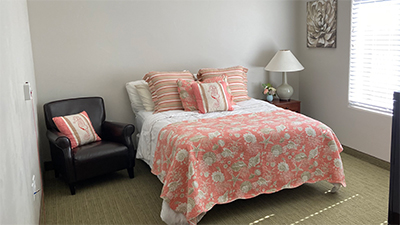
At BeeHive Homes of Henderson, Nevada, we offer the finest assisted living and memory care experience available in a cozy, comfortable homelike setting. Each of our residents has their own spacious room with an ADA approved bathroom and shower. We prepare and serve delicious home-cooked meals three times a day every day. We maintain a small, friendly community of only 20 residents per home. We provide regular activities that our residents find fun and contribute to their health and well-being. Our staff is attentive and caring and provides assistance with daily activities to our residents in a loving and respectful manner. We would like to invite you to tour and experience our memory care & assisted living home and feel the difference.
1000 Greenway Rd, Henderson, NV 89002
Business Hours
Families generally start taking a look at dementia care alternatives when something specific has actually failed: a fall, wandering from home, medication errors, or a frightening episode of confusion. The conversation then turns to senior care, assisted living, memory care, or respite care, and the choices can feel overwhelming. Size is one factor that hardly ever appears on the sales brochure, yet it shapes life more than nearly anything else.
Over the past 20 years dealing with older adults and their families, I have seen a consistent pattern. When dementia is included, smaller homes typically offer calmer days, less crises, and safer regimens. That does not mean every small home is excellent, or that every big neighborhood is troublesome. It indicates that size interacts with style, staffing, and culture in predictable ways that matter for both safety and confusion.
This short article looks closely at how smaller dementia care homes work, why they can be more secure, and when they are a much better fit than large assisted living or memory care facilities.
What "small" actually indicates in dementia care
When people hear "small home," they might think of a single-family house with a couple of locals. In dementia care, "little" typically indicates a residential setting designed for approximately 4 to 16 individuals living together as a family, often called:
- residential care homes
- board and care homes
- group homes or family care homes
- small-house memory care
In contrast, conventional assisted living or memory care communities can range from 40 to more than 100 homeowners, normally divided into systems or wings.
The secret difference is not simply the number of locals. It is the scale of everything: how far someone needs to stroll to the dining-room, the number of different team member they see in a day, the number of doors and corridors they must navigate, just how much noise and movement surrounds them at any provided moment.
Dementia amplifies all those elements. What seems like "good activity" to a healthy visitor can be experienced as chaos by someone whose brain can no longer filter noise and movement effectively. That is where smaller environments often shine.
Why smaller homes frequently feel safer
Families generally define "security" as avoiding concrete harms: falls, wandering, infections, choking, medication errors. In a small dementia care home, the same physical threats exist as in any senior care setting, but the environment makes them much easier to identify and manage.
Eyes on locals, without ending up being intrusive
One of the easiest advantages of a little home is view. Staff can see and hear more of what is occurring with less blind corners, fewer long corridors, and fewer rooms to patrol. This consistent low-level awareness is not the like gazing at residents. It looks more like this:
A caregiver outdoors kitchen area is preparing lunch. She hears a chair scrape behind her and instinctively glances back to see who is attempting to stand up. She notifications that Mr. H is reaching for his walker however looks unstable, so she crosses the space and provides her arm. The prospective fall never occurs, and nothing gets recorded in an occurrence log.
In a larger memory care system with 2 long corridors and multiple activity rooms, that very same small minute can go unnoticed. Assistant staffing ratios might be comparable on paper, but when staff are spread out across a bigger footprint, dangers have more room to grow.
This consistent, casual tracking is especially crucial for locals who have "great days" and "bad days." In a large setting it is easy to miss subtle changes in strolling pattern, cravings, or mood. In a little home, personnel see locals through the rhythm of an entire day and notice shifts earlier.
Familiarity that improves medical judgment
Smaller homes normally have less rotating staff. A resident with dementia may interact with the very same 6 to 8 caregivers most days. That depth of familiarity modifications how safety choices are made.
Over time, personnel discover each resident's baseline. They understand who constantly shuffles their feet, who tends to skip breakfast, who ends up being agitated late afternoon. When something is "off," it sticks out quickly.
I keep in mind a home manager in a 10-bed dementia care home who noticed that one resident kept rubbing his chest and shutting off the television. He had actually restricted language, so he could not explain his discomfort well. In a bigger building, the habits might have been chalked up to "typical dementia restlessness." She trusted her gut, called the on-call nurse, and he was transferred to the ER for what turned out to be a moderate cardiovascular disease caught early.
That is not a wonder story; it is a familiar one. In senior care, early detection frequently originates from personnel who understand the person all right to sense something subtle. Smaller sized homes make that depth of understanding more likely.
Fewer complete strangers, less opportunity for hazardous behavior
Larger assisted living and memory care neighborhoods naturally have more visitors, more vendors, more staff turnover, and more company workers filling in gaps. That volume of people is not inherently hazardous, but it presents variables that require to be managed: doors propped open, homeowners following visitors into elevators, medications delivered to lots of systems at the same time, new staff still discovering emergency procedures.
Smaller dementia care homes see less consistent traffic. Visitors generally call the doorbell. Staff understand which messenger is anticipated. When something looks out of place, somebody questions it. It is just easier to acknowledge what "normal" looks like.
assisted living henderson nvFor residents vulnerable to wandering or exit-seeking, that managed entry and exit is important. Outside doors are still alarmed and protected according to regulation, but the added human layer of "this is my house, I observe who comes and goes" makes elopement less likely.
How smaller settings minimize confusion and distress
Safety is not only about physical harm. For people with dementia, psychological overload, confusion, and agitation can be simply as harmful. They result in roaming, hostility, rejection of care, and often hospitalization.
Smaller homes tend to provide a gentler cognitive landscape.
Shorter distances, clearer layouts
Imagine waking up in a new location, unsure which door results in the restroom, hearing sound in the hallway, and feeling the urgent need to discover a familiar face. For someone with dementia, that circumstance can provoke panic.
In a small home, the route from bed room to restroom or bedroom to cooking area is usually brief and predictable. Rooms often open onto a single main location, like a combined living and dining-room. Visual cues can assist: a contrasting-colored door for the bathroom, a large clock on the wall, individual pictures by the bed room entrance.
For numerous homeowners, that simplicity reduces "choice points." The fewer choices they must make in a hallway, the less confusion they feel. You typically see locals able to move about more separately in a little home even at later stages of dementia, due to the fact that the environment matches their remaining cognitive abilities.
Reduced noise and sensory overload
Large memory care systems can be dynamic and active, which is positive for some people. But for others with dementia, constant background sound is stressful. For many years I have heard numerous households explain the very same pattern: their loved one becomes more upset in the late afternoon, especially when the dining room fills, televisions shriek, and staff change shifts.
Smaller homes normally have just one typical area and less competing sources of sound. Staff do not require to scream down a long corridor or call across a big dining room. Families who visit frequently comment that it feels "quieter" or "more unwinded" even during hectic times like meals.
That calmer soundscape helps locals procedure what is taking place around them. When there are fewer voices and less synchronised activities, personnel can use gentle, direct interaction that residents can follow. This decreases misconceptions that can escalate into aggression or resistance to care.
Repetition and regimen that feel natural
People with dementia rely heavily on routine. Their brain may not keep in mind the other day, however it can still acknowledge patterns: this is my breakfast table, this is the chair where I usually sit, this is the caregiver who helps me with my bath.
In a little dementia care home, routines are simpler to keep both consistent and versatile. The same dining-room table can function as the spot for breakfast, crafts, and afternoon coffee. The exact same caretaker frequently assists with both early morning dressing and night medications. The visual scene changes less, however the human interaction remains abundant and personal.
That combination tends to lower stress and anxiety. When people understand approximately what comes next, even if they can not call it, they feel more safe. You typically see less behavioral outbursts, fewer episodes of "I need to go home," and a greater desire to accept personal care.
Assisted living, memory care, and little homes: how they differ
Families in some cases assume that "assisted living" and "memory care" are entirely separate from smaller residential homes. In practice, these terms refer to services and regulative classifications, not strictly to size.
Typical patterns look like this:
Traditional assisted living provides a series of assist with everyday tasks such as bathing, dressing, and medication management, generally in apartment-style units. Activities and dining are more hotel-like, with a focus on social engagement, trips, and facilities. Some citizens have moderate cognitive impairment, but the environment caters mostly to those who can browse independently.
Specialized memory care exists either as a secured unit within a larger assisted living or as a stand-alone building. These settings focus on dementia-specific training, secured doors, structured activity programs, and greater staff participation in daily life. They still tend to be medium to big in size.
Small residential dementia care homes often provide a level of care comparable to or greater than memory care units, but in a house-like setting. Bedrooms might be private or shared, and common areas feel more like a family living room than a center lounge. Regulations vary by state or country, however they usually fall under the umbrella of assisted living or board and care.
When thinking about size, the real concern is not, "Is it assisted living or memory care?" It is, "The number of homeowners share this area, and how does that number impact daily safety and confusion?"
Trade-offs and limitations of little dementia care homes
If little homes were perfect for everyone, every large center would have scaled down by now. There are real compromises to consider.
Limited on-site medical resources
Most little homes can not employ full-time nurses, therapists, or doctors. They count on checking out home health, hospice, or nurse experts. For numerous citizens, that is totally adequate, especially when staff are attentive and communicate modifications early.
However, if your family member has complicated medical needs, depends upon frequent therapy, or requires close monitoring for conditions like breakable diabetes or severe heart failure, a larger community with an on-site nurse all the time may be the safer option. The dementia-friendly environment has to be stabilized with the medical realities.
Fewer facilities and group activities
Small homes do not have health clubs, theater, or large onsite chapels. Activities are generally more intimate: baking cookies, tending a little garden, reading the paper together, easy workouts in the living room.
For somebody who has always drawn energy from big social gatherings, performances, or big group games, a bigger assisted living or memory care program with robust activity calendars may feel more engaging, at least in earlier phases of dementia. Over time, as the disease progresses, many of those people become more comfy in smaller sized groups, however choices still matter.
Variability in quality
Just as large centers can be outstanding or bad, small homes differ widely. A warm, well-run 8-bed memory care home is a really various experience from an inadequately monitored board and care with the exact same number of residents.
Because there is less official structure, the culture of a little home depends greatly on the owner and supervisor. Staff training, turnover, food quality, fire security practices, and infection control can be exceptional or average. Households need to do more legwork to examine quality, which I will deal with shortly.
How smaller homes support respite care and smoother transitions
Respite care, whether for a few days or a couple of weeks, gives household caregivers a critical break while keeping their loved one safe. For people with dementia, however, any modification in environment can be disorienting. The "strangeness" element tends to be lower in smaller homes.
Shorter ranges, a homelike cooking area, and familiar home routines frequently make it much easier for somebody to adjust during respite. It feels less like moving into a facility and more like staying at a relative's home that occurs to have expert assistance. Personnel can normally invest more individually time helping the person orient, explaining where the bathroom is, strolling with them to meals, and sitting next to them during the first couple of nights.
When families are thinking about a permanent relocation from home care, a respite remain in a small dementia care home can function as a mild trial. It allows everybody to observe whether the scale and rhythm of your home decrease confusion and improve safety compared with the present scenario at home.
What to search for when checking out a small dementia care home
Walkthroughs inform you more than sales brochures ever will. When touring a smaller dementia care home, focus less on design and more on how the environment and staff interactions will affect safety and confusion.
Here is a compact checklist you can bring in your head:
- First impressions of calm: As you get in, discover whether residents seem unwinded, engaged, or noticeably distressed. Periodic agitation is regular, but the total tone ought to be tranquil rather than chaotic.
- Visibility and layout: Stand in the typical area and take a look around. Can staff easily see bed room doors, bathroom doors, and primary pathways? Are there puzzling dead-end hallways or many identical doors? Easier is normally better for dementia.
- Staff knowing the citizens: Listen to how personnel talk to residents and about them. Does someone seem to know everyone's preferences, regimens, and family? Ask a caretaker how they would recognize if a specific resident was "not themselves" that day.
- Safe but not prison-like security: Doors ought to be secured properly for residents vulnerable to roaming, however your home should not feel like a locked ward. Ask how they manage a resident who insists on "going home." Do they have techniques beyond simply blocking the exit?
- Nighttime coverage and emergencies: Clarify who is awake during the night, the number of staff exist, and how rapidly emergency services can get here. Ask for an uncomplicated explanation of what occurs if your loved one falls after hours or shows sudden confusion that might indicate an infection or stroke.
You find out as much from how personnel response these questions as from the answers themselves. Clear, specific responses usually reflect practiced regimens, not improvisation.
Everyday examples of security and minimized confusion
Abstract concepts are practical, but families frequently link finest with ordinary minutes. A couple of composite examples, drawn from real-world patterns, can highlight how smaller sized homes play out day to day.
A female with moderate dementia keeps leaving the range on in the house and has fallen two times while walking to her separated garage. Her boy stresses over her security however dreads the concept of her living in a large building. She moves into a 12-resident memory care home situated in a neighborhood. Her bedroom is ten actions from the bathroom and twenty actions from the dining table. She eats with the exact same small group every meal. Within weeks, her kid notices she is no longer calling him in a panic since she "can not find the kitchen area." The smaller physical space holds the regular for her.
A retired instructor who liked discussion moves from a large assisted living structure, where she felt constantly overstimulated, into an 8-resident dementia care home. There are fewer individuals, but the conversations are more regular and individualized. Personnel sit with her throughout afternoon tea, inquire about her mentor days, and include her in little tasks like folding napkins. Her outbursts during busy mealtimes vanish, likely because the sensory load is lower and personnel can expect her needs.
A man with early dementia who tends to wander in the evening lives in a small home where the night employee works mostly from the open-plan kitchen and living room. His bed room door shows up from that perspective. When he gets up at 2 a.m., disoriented and heading towards the front door, the caregiver quickly approaches, speaks gently, and uses a snack at the cooking area table. Within half an hour he is calm enough to go back to bed. No door alarms stun him or the other locals, and the situation never escalates.
These situations have one thing in typical: the scale of the home allows personnel to respond early, gently, and personally, which avoids small confusion from becoming a significant security incident.
Questions to ask yourself about your family member
Choosing between a little home, standard assisted living, or a bigger memory care neighborhood is hardly ever simple. The best response depends upon the individual, the phase of dementia, and your household's values. As you weigh options, it can help to ask a couple of pointed questions:
- How does my loved one respond to crowds, sound, and hectic environments now? Think of household gatherings, dining establishments, or medical waiting spaces. Their present tolerance is a strong clue.
- Is their biggest threat physical (falls, intricate medical requirements) or behavioral (agitation, roaming, deceptions)? Little homes specifically excel at minimizing behavioral triggers, though they can manage many physical risks too.
- How important are features compared to emotional security? Gym classes, getaways, and on-site salons matter to some people, but for others, foreseeable faces and a calm living room matter more.
- How far along is the dementia, and how quickly is it progressing? Somebody early in the illness may initially delight in the range of a bigger assisted living neighborhood, then take advantage of a later transfer to a smaller home as confusion increases.
- What level of access do I desire as a member of the family? In small homes, families often construct close relationships with personnel and can participate in day-to-day regimens more naturally. Choose how involved you hope to be.
There is no single proper response. However, for lots of people beyond the really earliest stages of dementia, smaller sized homes line up more closely with how their brain now processes space, time, and relationships.
Bringing it together
Smaller dementia care homes are not merely "cute" alternatives to bigger senior care neighborhoods. Their scale straight affects security, confusion, and quality of life. Shorter distances, less choice points, familiar staff, and reduced noise collaborate to support brains that now run with narrower bandwidth.
When households tell me years later on that they are at peace with the care their loved one gotten, they rarely speak about chandeliers or calendars packed with activities. They discuss how staff knew their father's humor, how their mother stopped trying to "escape," how your house felt calm even on difficult days.

Whether you are searching for assisted living, dedicated memory care, or short-term respite care, it is worth paying very close attention to size and layout, not just services and price. In dementia care, smaller typically suggests safer, clearer, and kinder to the individual living inside the disease.
BeeHive Homes of Henderson provides assisted living care
BeeHive Homes of Henderson provides memory care services
BeeHive Homes of Henderson provides respite care services
BeeHive Homes of Henderson supports assistance with bathing and grooming
BeeHive Homes of Henderson offers private bedrooms with private bathrooms
BeeHive Homes of Henderson provides medication monitoring and documentation
BeeHive Homes of Henderson serves dietitian-approved meals
BeeHive Homes of Henderson provides housekeeping services
BeeHive Homes of Henderson provides laundry services
BeeHive Homes of Henderson offers community dining and social engagement activities
BeeHive Homes of Henderson features life enrichment activities
BeeHive Homes of Henderson supports personal care assistance during meals and daily routines
BeeHive Homes of Henderson promotes frequent physical and mental exercise opportunities
BeeHive Homes of Henderson provides a home-like residential environment
BeeHive Homes of Henderson creates customized care plans as residents’ needs change
BeeHive Homes of Henderson assesses individual resident care needs
BeeHive Homes of Henderson accepts private pay and long-term care insurance
BeeHive Homes of Henderson assists qualified veterans with Aid and Attendance benefits
BeeHive Homes of Henderson encourages meaningful resident-to-staff relationships
BeeHive Homes of Henderson delivers compassionate, attentive senior care focused on dignity and comfort
BeeHive Homes of Henderson has a phone number of (702) 551-0265
BeeHive Homes of Henderson has an address of 1000 Greenway Rd, Henderson, NV 89002
BeeHive Homes of Henderson has a website https://beehivehomes.com/locations/henderson/
BeeHive Homes of Henderson has Google Maps listing https://maps.app.goo.gl/qpZ3TKgbxCu1MVSh8
BeeHive Homes of Henderson has Instagram page https://www.instagram.com/beehivehomeshenderson/
BeeHive Homes of Henderson has an YouTube page https://www.youtube.com/@hamiltonshives4468
BeeHive Homes of Henderson won Top Assisted Living Homes 2025
BeeHive Homes of Henderson earned Best Customer Service Award 2024
BeeHive Homes of Henderson placed 1st for Senior Living Communities 2025
People Also Ask about BeeHive Homes of Henderson
What is BeeHive Homes of Henderson Living monthly room rate?
Our base rate is $4,700 per month for assisted living and $5,700 per month for memory care plus a one-time community fee of $2,500. We do an assessment of each resident's needs prior to move-in, so each resident's rate may be higher. These prices fall into three tiers based on resident needs and range from $4,700/month to $7,300/month. However, after we do the assessment and quote a price, there are no add-ons or hidden fees
Does Medicare and Medicaid pay for a stay at Bee Hive Homes?
Medicare pays for hospital and nursing home stays, but does not pay for assisted living. Some assisted living facilities are Medicaid providers but we are not. We do accept private pay, long-term care insurance, and we can assist qualified Veterans with approval for the Aid and Attendance program
Do we have a nurse on staff?
We do have a nurse on contract who is available as a resource to our staff but our residents' needs do not require a nurse on-site. We always have trained caregivers in the home and awake around the clock
What can you tell me about the food at Bee Hive?
You have to smell it and taste it to believe it! We use dietitian-approved meals with alternates available for flexibility, and we can accommodate needs for different textures and therapeutic diets. We have found that most physicians are happy to relax diet restrictions without any negative effect on our residents
Do we allow pets?
We do allow small pets as long as the resident is able to care for them. State regulations also require that we have evidence of current immunizations for any required shots
Where is BeeHive Homes of Henderson located?
BeeHive Homes of Henderson is conveniently located at 1000 Greenway Rd, Henderson, NV 89002. You can easily find directions on Google Maps or call at (702) 551-0265 Monday through Sunday 9:00am to 5:00pm
How can I contact BeeHive Homes of Henderson?
You can contact BeeHive Homes of Henderson by phone at: (702) 551-0265, visit their website at https://beehivehomes.com/locations/henderson/ or connect on social media via Instagram or Facebook
Take a drive to Yoshiya Japanese Kitchen. Yoshiya Japanese Kitchen offers a nearby dining destination where families supporting loved ones through Assisted living memory care senior care elderly care and respite care can gather for quality time together.